Free Newsletter Subscription
        MCN All Access

Social Science

How Can Networks Spin Online Chatter Into Ratings Gold?

By Todd Spangler -- Multichannel News, 9/5/2011 12:01:00 AM

TNT’s remake of the classic 1980s primetime soap Dallas won’t debut for another year — but as of last week, the show already had 117,260 fans on Facebook.

No doubt, many of the thumbs-up the show received on its Facebook page stemmed from a kitschy interest in Larry Hagman reprising his role as oil tycoon J.R. Ewing. But the real question, which nobody can predict with certainty, is: To what extent will that social activity translate into ratings when Dallas premieres in the summer of 2012?

Social-media marketing “is a mix of art and science,” Tricia Melton, senior vice president of entertainment marketing for TBS, TNT and Turner Classic Movies at Turner Broadcasting System, acknowledged.
Cover_Story_Image_09/05
Cable networks and media companies are becoming increasingly savvy about using Twitter, Facebook and other social-networking services to reach their target audiences. Such initiatives can effectively turn avid viewers into marketing partners and provide new avenues for engaging fans.

Indeed, TV-marketing executives now accept that promotional efforts for new and existing shows must extend to social networks. In the case of Dallas, TNT made sure the show’s Facebook page was live when the network announced it on July 8. Dallas garnered 100,000 “likes” in the first three days.

“Social absolutely does allow you to amplify your message,” Melton said. “You still need to build some amount of general awareness … but social is the connective tissue that links everything together.”

Ideally, TV programmers can get social “conversations” to work in a virtuous circle, with tweets fueling live tune-in, while millions of viewers in turn share their favorite TV shows with friends and followers.

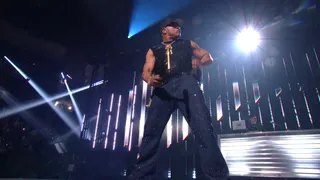
That dynamic appeared to be on full display with MTV’s 2011 Video Music Awards. The awards show, which aired Sunday, Aug. 28, not only scored the biggest audience in the network’s history, but it also rocked the social mediasphere.

The 2011 VMAs were the “most social program measured to date,” according to social-TV measurement company SocialGuide, which found a total of 559,610 unique commenters (59% share) shared 1,323,922 comments (55% share). As measured by Wiredset’s Trendrr, the VMAs generated a whopping 5.57 million comments, 48% of which were from mobile devices, the night of the show. (Trendrr provides the data for Multichannel News’ Buzz Meter feature.)

Whichever metric you look at, the 2011 VMAs easily beat the previous high-water mark for activity surrounding a single telecast — MTV’s Jersey Shore season-four premiere on Aug. 4 — more than fourfold.

SOCIAL DISENGAGEMENT?

But today, there’s no way to definitively correlate social-media activity with ratings. In fact, some shows with high social-engagement scores have declined in the ratings.

“Where you see some caution on the part of media companies is, ‘If you want me to spend money I need to see whether engagement will translate into ratings,’ ” Christy Tanner, executive vice president and general manager of TVGuide.com and TV Guide Mobile, said.

Some examples of shows with good buzz but declining viewers: Fox’s Glee and ABC’s Grey’s Anatomy were Nos. 4 and 12, respectively, on TVGuide.com’s social-activity ranking overall last season, but ratings for both shows declined, Tanner noted. On the other hand, CBS’s Criminal Minds (No. 3) and Fox’s Bones (No. 7) had ratings increases.

Then there’s late-night talk show Lopez Tonight, which TBS declined to renew this summer after host George Lopez’s two-year run. The show was consistently in the top 20 of cable shows on Wiredset’s Trendrr social-media rankings. Lopez Tonight the week before it was axed scored higher than The Daily Show With Jon Stewart and was neck and neck with The Colbert Report, both of which had far better ratings and audience trends.

Lisa Hsia, executive vice president of Bravo Digital Media, believes the industry is “at this prehistoric stage of social media.”

“We’re learning the potential of realizing revenue off it,” Hsia said. “For Bravo, social media is a driver of buzz and engagement, but it’s not the core driver of revenue or ratings.”

The key, according to industry executives, is to pull different social-media levers depending on the nature of the show and its audience.

“For an established show, it’s about entertainment, and ongoing dialogue,” Nickelodeon executive vice president and general manager of digital Steve Youngwood said — pointing out that SpongeBob SquarePants has more than 27 million fans on Facebook.

Research companies, including Nielsen, are stepping up their ability to measure social chatter to help networks and TV producers understand what works and what doesn’t.

Nielsen is in the midst of a project analyzing the effect of social-media activity on more than 250 broadcast and cable shows. The company has applied 70 different statistical models to seek out an association between social activity and television consumption, according to Radha Subramanyam, Nielsen’s senior vice president of media and advertising insights and analytics.

‘WATERCOOLER ON SPEED’

The initial takeaway: “We are finding statistically meaningful relationships for all shows,” she said. “Social media is the watercooler and word of mouth on speed. One person can literally reach thousands of other people.”

There are variations depending on show genre and audience demographics, Subramanyam cautioned. Primetime dramas, for example, may have high ratings but relatively low social activity. Nielsen is still crunching the numbers and plans to release additional findings from the research within the next two months.

“We are much closer than we have ever been to being able to measure all this,” she said.

To Subramanyam, though, the correlation between social and TV viewing is not as interesting as being able to closely monitor social activity. Having a “dashboard” view of online buzz will let marketers decide whether they need to boost or perhaps scale back their social-media efforts.

“You have to know your audience and your brand,” she said. “In some cases, it makes sense to reach out to influentials, and sometimes it doesn’t.”

IMPACT OF ‘INFLUENTIALS’

By “influentials,” Subramanyam is referring to the elite group of users with a large number of followers, who can make the needle move when they tweet something. Social-media users have an average 150 friends or followers, according to Nielsen, while highly influential users may have thousands or even millions.

Klout, a Los Angeles-based research and marketing-services startup, tries to measure how influential a social-media user is online on a scale of one to 100. The company looks at factors including how many times a person’s comments are retweeted on Twitter and how often their links are clicked on to come up with the score. In July, Klout processed 3 billion social-media transactions.

Klout has conducted campaigns on behalf of TNT, The Walt Disney Co. and Paramount Pictures to promote new shows and movies to the site’s registered users, CEO Joe Fernandez said.

“What we’ve learned is, the one-off efforts of, ‘Hey, check out this new show,’ result in a big spike, but then it drops off,” Fernandez said. “You need to keep people engaged throughout the show. The influencers continue to drive the conversation.”

According to Klout, Justin Bieber (who has more than 12 million Twitter followers) is currently the most influential person online, with Lady Gaga and Kanye West also in the top echelon.

Other startups that have sprung up to provide social-media marketing research include Bluefin Labs, Networked Insights, SocialGuide and Wiredset.

By measuring shows with the highest social currency, “the reality is, what it’s identifying is an undervalued media asset” if ratings don’t follow a similar trajectory, Wiredset founder and CEO Mark Ghuneim said.

Networked Insights CEO Dan Neely claims his company monitors the social activity of 200 million people in the U.S., covering 87% of the Web. The Madison, Wis.-based firm has developed a modeling technique that forecasts how well a show will perform based on the real-time reactions that ripple across social networks. Networked Insights also provides a measure of “engagement,” to try to reflect the value of social buzz that isn’t accounted for in Nielsen ratings.

“The challenge for the networks is they don’t know how to sell against social today,” Neely said. “And people are figuring out whether a show is good or bad based on 30 people sitting in a room with a dial that says, ‘I like it,’ or ‘I don’t like it.’ ”

Another startup, Bluefin Labs, formed by two former MIT Research Lab scientists, is similarly scanning hundreds of satellite-delivered channels to identify the content and ads. Bluefin matches up that TV data — 2 million minutes per month, representing more than 115,000 individual shows since the start of 2011 — with social-networking conversations, and sells the data and related tools to advertisers, agencies and networks.

Tom Thai, Bluefin’s vice president of marketing and business development, said his company provides live data on social trending patterns, akin to a Bloomberg terminal for stock traders. “We can help [programmers] make better and more sophisticated decisions about what to put on TV,” he said.

Even before TV networks are able to draw a straight-line connection between social media and television ratings, they’re experimenting with a variety of tactics to deliver additional content to viewers, facilitate social interactions and draw them deeper into a show’s content.

LAYERS ON TOP OF TV

MTV this summer released WatchWith apps for the iPad and iPhone, which provide live commentary from the stars of shows including Jersey Shore, Teen Wolf and Awkward. The apps determine the time zone of a user from the geolocation capabilities in the device, and sync up the content with the live TV.

“With WatchWith, we can deliver curated content and interactions with our talent to an engaged audience during the moments they want it the most,” MTV Digital vice president Colin Helms said. “Our approach is to provide an additive layer around our shows to encourage fan participation, without distracting from the core viewing.”

For the 2011 VMAs, MTV also pushed a second-screen feature, “VMA All Access Live,” to provide real-time videos and social content to drive viewers to tune into the live broadcast.

The VMA apps, available via computers and iOS and Android devices, included MTV’s “Twitter Tracker” feature. Sponsored by Verizon, the feature lets viewers follow the popularity of the various VMA performers and presenters over the course of the night, with the subjects’ images growing and shrinking according to how many times they were mentioned on Twitter.

“A lot of our thinking is around, how are we going to expand that television experience?” MTV Networks director of social viewing Jacob Shwirtz said. Overall, MTVN owns and operates more than 600 social media accounts.

In another recent social-media integration with a TV network, The Weather Channel buddied up with Twitter for the launch of The Weather Channel Social, which identifies local, weather-related tweets and then makes them available on television, Web and mobile platforms.

“Back from the Ice Age, the weather has been the way people start said a conversation,” Cameron Clayton, executive vice president of digital products of The Weather Channel Cos., said. “We provide this story about what’s happening in your local area, about how people are experiencing the weather.”

Weather is using Wiredset’s Trendrr analysis technology to automatically identify weather-related tweets, using classification algorithms. With the social strategy, “we’re trying to change the perception of our brand,” Clayton added. “A lot of this is around the shift we need to make as a media company from a one-way communicator to a two-way communicator.”

On the TV side, “I’d be lying if I didn’t say we weren’t trying to bring down our age” by attracting younger viewers to the network. “Hopefully, we will see the effect in the minute- by-minute ratings.”

The Weather Channel cable network will feature on-air mentions and “Tweets of the Day” around the content. It plans to show real-time messages before, during and after weather events, as well as while following and reporting on weather-related trends from Twitter.

SHARE THE LOVE

The two major social platforms are Facebook, which claims to have more than 750 million active users worldwide, and Twitter, with some 200 million.

In addition to the Big Two, there are TV-specific social services, which piggyback on top of Facebook and Twitter to let viewers “check in” to a show, post comments and potentially earn rewards for being mega-fans. Some of the apps in this realm include those from GetGlue, Miso and IntoNow, which Yahoo acquired earlier this year.

“It’s just obvious that helping people talk about your shows is a good thing,” GetGlue chief operating officer Fraser Kelton said.

GetGlue’s approximately 1.5 million users entered 7 million check-ins in June 2011, twice as many as in April, according to Kelton. The company provides enhanced content through its apps for 250 TV shows from 35 different networks, including HBO, ESPN, Discovery Channel, CBS, Fox and Food Network.

For the June 26 season-four premiere of HBO’s True Blood, a total of 40,000 GetGlue users checked in — reaching about 15 million of their friends and followers. “If a fan is checking in, that’s a strong endorsement,” Kelton said. “It’s strong, emotional marketing from your fans to their friends.”

Only 1% of total comments about a show come from such check-in apps, though, according to SocialGuide CEO Sean Casey. His company tracks social activity for 163 networks, using the open interfaces of the two big social networks, to come up with a measure of engagement for shows currently on the air and coming up in the next two hours.

“Not that check-in apps don’t have value, but it requires somebody to go to a site other than Facebook or Twitter to do this explicit action, which is a challenge,” he said.

At this stage, TV programmers are experimenting with numerous ways to reach fans in a social context.

HBO this spring launched “HBOConnect” as a home for the premium network’s social activities. The site is “R&D for us in the social-TV space,” Sabrina Caluori, the network’s head of social media and director of marketing, said. “We’re going to see how that site is being used, and the best functionality and features will be integrated into the next round of implementation on HBOGo.com and HBO.com.”

A highly engaged user on HBO’s social networks is presumably less likely to churn. In addition, HBO’s social media efforts are driving traffic to its digital properties, which boosts revenue from licensed goods and merchandise. “We’re doing promotions to figure out what the fans really love from an episode of True Blood to sell mugs or T-shirts,” Caluori said.

The next big step in “social TV” will be tighter integration of fan-based interaction in the programming itself.

For example, Bravo’s Top Chef: Texas, season nine of the franchise set to debut this fall, will incorporate “cutting-edge transmedia experience with storylines playing out across multiple platforms” with a “level of interactivity [that] is unprecedented,” the network promises. Bravo isn’t tipping its hand about the specific social features for the show, which is being filmed in Austin, Dallas and San Antonio.

Not all marketers are comfortable with getting knee-deep into social yet. But they’ll have to get used to the “new age of democratization of conversation and media,” Nielsen’s Subramanyam said.

“Social is still new. It’s still a little bit scary,” she said. “But all brands need to listen to their customers — especially when their customers are talking to other customers. Marketers own their own brands, but now consumers do, too, to some extent.”

But as cable-network executives pointed out, social media is just one arrow in the quiver in how to promote and support a show.

“We’re wrapping social-media extensions around those more traditional marketing tactics,” HBO’s Caluori said. “I don’t think social ever replaces traditional advertising.”

BUZZ BOOST?

The effect of social media on TV ratings isn’t clear, but anecdotal evidence shows it probably helps:


MTV’S 2011 ‘VIDEO MUSIC AWARDS’ telecast on Aug. 28 generated 5.67 million social interactions for the day, according to Trendrr. The show attracted the largest audience in network history, with 12.4 million total viewers.

CNN’S ‘PIERS MORGAN TONIGHT’ booked Charlie Sheen at the last minute on Feb. 28, 2011. The network promoted his appearance on Twitter four minutes before air; at the time, it was Morgan’s second-highest- rated show since launch with 1.35 million viewers.

BRAVO’S ‘THE REAL HOUSEWIVES OF NEW YORK CITY’ season three featured weekly “Talk Bubble” live-chat events, featuring cast members during show airings. The network’s research department said the chats resulted in a 10% lift in on-air ratings, cumulative for March to June 2010.

SOURCE: Multichannel News research
Talkback
Related Content

No related content found.

More >>>

Newbay Business Information Resource Center

Featured Company


Most Recent Resources

Advertisement
More Content
  • Voices
  • Photos
  • Podcasts

Sorry, no blogs are active for this topic.

Hallmark Christmas in August

FREEZE FRAME

Hallmark's "Christmas in August," mun2 wins an Imagen Awards and more parties and events for the week of Sept. 12.
Radio Disney's 15th Anniversary

FREEZE FRAME

Radio Disney's 15th anniversary, The Closer's 100th episode and other parties and events for the week of Sept. 5.
Whisker Wars premiere

FREEZE FRAME

'Whisker Wars' premiere in New York, The Weather Channel Social rollout and other events for the week of Aug. 22.


Advertisement
About Us   |   Advertising Info   |   Site Map   |   Contact Us   |   Subscription   |   Affiliate Links   |   RSS
© 2011 NewBay Media, LLC. 28 East 28th Street, 12th floor, New York, NY 10016 T (212) 378-0400 F (212) 378-0470
Use of this website is subject to its Terms of Use | Privacy Policy