Login  |  Register          Free Newsletter Subscription
Subscribe to MCN Magazine
Email
Print
Reprint
Learn RSS

YouTube to Appear on Apple TV

Set-Top Will Stream Site’s Most Popular Clips Wirelessly

By Todd Spangler -- Multichannel News, 6/4/2007

Sidebars:
Apple TV-YouTube Connection Advances Google, Challenges Cable

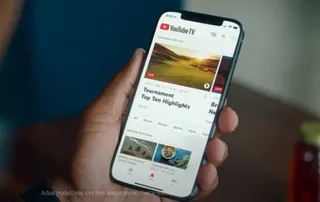
Apple Inc. is bringing Google’s YouTube to big-screen TVs, nationwide.

Starting in mid-June, Apple TV will wirelessly stream YouTube videos directly from Internet connections and play them on users’ television sets.

“This is the first time users can easily browse, find and watch YouTube videos right from their living-room couch, and it’s really, really fun,” Apple CEO Steve Jobs said in a prepared statement. “YouTube is a worldwide sensation, and Apple TV is bringing it directly from the Internet onto the wide-screen TV in your living room.”

Apple said thousands of the most current and popular YouTube videos will be available on Apple TV initially, with the full YouTube catalog to be available this fall. YouTube members will also be able to log in to their YouTube accounts on Apple TV to view and save their favorite videos.

The move by Apple comes even as Google and YouTube are locked in a standoff with Viacom, which filed a $1 billion copyright-infringement lawsuit against the video-sharing site.

Google has insisted that it “respects” copyrights and responded to Viacom’s copyright-infringement lawsuit by asserting that the media company’s legal action “threatens the way hundreds of millions of people” use the Internet.

Also last week, Apple announced that it is offering a new Apple TV option with a 160-gigabyte hard drive — four times the capacity of the standard unit. The 160-GB Apple TV will be priced at $399 compared with a suggested retail price of $299 for the 40-GB version that started shipping in March.


Apple TV-YouTube Connection Advances Google, Challenges Cable

By Gary Arlen

San Diego — Of all the alliances Apple Inc. could create to deliver Internet video to the living room via its new Apple TV set-top box, the choice of YouTube was a typically audacious move.

At once, it signals that Apple clearly intends to deliver a wide range of Internet video directly to home TV sets. And, in the same stroke, it accelerates the TV presence of YouTube’s parent, Google, with its well-known voracious media appetite.

Sure, the deal further increases the “coolness” factor for Apple TV, as if that were needed. But it also enhances the credibility of Web-delivered TV as a video-on-demand competitor to existing providers, including cable companies.

In announcing the Apple TV-YouTube package, Apple CEO Steve Jobs made it clear that this is just one — for now, the biggest — of many alternative video packages that will be available via his new device to deliver Internet video to conventional TV receivers.

“We’ve wanted to do this for a few years,” Jobs said. “It’s amazing the variety of what you can get.”

COMPETITION FOR CABLE

To underscore his competitive attitude toward the cable industry, Jobs casually observed that cable providers “use that very strange software called 'OCAP.’ v” That, of course, is the OpenCable Applications Platform, designed to make it easy for developers to create cool interactive features and services that operate on TVs hooked to cable networks.

He said that Apple could “not see a go-to-market strategy” that makes use of such technology. Jobs suggested that Apple TV is comparable to the DVD player, which was the fastest-selling home video device in consumer-electronics history.

“We want to be the DVD player for the Internet age,” Jobs said.

As he demonstrated examples of short YouTube clips at The Wall Street Journal’s “D: All Things Digital” conference in suburban San Diego on Wednesday, the challenges of Internet video became clear — and, in some cases, blurry.

When displayed on a 100-inch screen, the often-fuzzy amateur videos occasionally became painful to watch. Although the content itself was compelling, many in the audience — including session moderator Walter Mossberg, the Journal’s host — wondered if viewers would tolerate the grainy, shaky visuals on their expensive, new digital monitors at home.

One of the videos, a “human slingshot” with a bungee cord-like launch from a lawn tractor, generated plenty of guffaws from the tech-savvy D: audience; but the production values, especially as seen on the huge screen, defined a watch-it-once experience.

But such nitpicking begs the question, since YouTube (and other emerging short-form video distributors) are looking for more professional content for their Internet video services. A D: speaker prior to Jobs, CBS Corp. CEO Les Moonves, pointed out that his company has hired a “band of kids” to create series of short-form programs. These, he said, are intended for distribution as Web video, although not necessarily for Apple TV. Plenty of other high-quality productions are in the pipeline from other professional sources, he said.

Jobs noted that Apple TV will be able to carry high-definition video, adding another competitive element to the set-top wars. He offered no details.

NO PREDICTIVE-NESS

In his demonstration, Jobs highlighted new features of Apple TV navigation, including software that will be available for download in June to access YouTube and future content.

A stylized version of the YouTube menu screen is available. An on-screen virtual keyboard (that is, an alphabet grid) requires users to move up, down, left or right via the remote control to type words when searching for a specific video.

Curiously, the demonstrated version did not include predictive typing, which would narrow the choices for the next letter in each sequence and bring up titles more easily. That may be a function of limited capability in the Apple TV processor, but Jobs did not address such technical details.

Jobs also skirted any discussion of revenue models for Apple TV and its new and future content partners.

PORTABLE PROSPECTS

Never in his remarks at D: did Jobs draw a connection between Apple TV and the even-more-highly-awaited iPhone. Apple’s CEO spent plenty of time discussing the new mobile phone, which will be exclusively offered in the U.S. on AT&T’s wireless system. Given the competitive nature of phone and cable companies — and AT&T’s U-Verse Internet-Protocol TV agenda — it appears likely that Apple and AT&T will devise arrangements that converge the applications of iPhone and Apple TV.

In particular, the vaunted ability to control a set-top box, including setting up access or even remote viewing (akin to a SlingBox’s capabilities) could become part of a multipurpose service.

Since Motorola’s “connected home” and various Cisco/Scientific Atlanta plans envision similar services for cable-system operators, the aggressive Apple agenda takes on greater competitive implications.

Jobs’ comment on a seemingly unrelated topic, the use of portable devices, certainly raised the prospect for such services.

“Video is here to stay on portable devices; it will grow,” said the man in the black turtleneck and jeans — an iconic prototype of the “Mac guy” in Apple’s TV commercials.

Email
Print
Reprint
Learn RSS

Talkback

We would love your feedback!

Post a comment

» VIEW ALL TALKBACK THREADS

Related Content

Related Content


By This Author

PRODUCT WIRE


Advertisement
Sponsored Links

More Content

  • Voices
  • Photos
  • Podcasts

Voices

  • Todd Spangler
    BIT RATE

    September 6, 2008
    Bandwidth Cap-tivity
    Is next-generation cable broadband getting all dressed up with nowhere to go? The paradox of Co...
    More
  • Ted Hearn
    Capital Ideas

    September 5, 2008
    Hurricane Bonus
    Another hurricane has crashed into New Orleans just as the city seemed to be completing its recovery...
    More
  • » VIEW ALL BLOGS RSS

Photos

  • USA Network's Sandy 'Burn Notice'
    USA Network transplanted ‘Burn Notice’s’ Miami beach setting to Times Square for a promotional event in support of the second-season premiere of the original series.
  • Comcast's New Video Wall
    The 83-by-25-foot, 10-million-pixel high-definition video wall located in the lobby of Comcast's new corporate headquarters has become quite a tourist attraction in downtown Philadelphia.
  • National Educational Computing Conference
    Operators, programmers, Cable in the Classroom and CTAM shared their resources with more than 18,000 school leaders, educational technology purchasers and decision-makers this week at the National Educational Computing Conference in San Antonio.

Podcasts

Advertisements


NEWSLETTERS

Click on a title below to learn more.

Multichannel Newswire
MCN HD Update
MCN Telco IP Update
MCN Local Cable Advertising Sales
MCN Hispanic Television Update
MCN HD Programming
Multichannel Multicultural Newsletter
Multichannel Friday First Read
©2008 Reed Business Information, a division of Reed Elsevier Inc. All rights reserved.
Use of this Web site is subject to its Terms of Use | Privacy Policy
Please visit these other Reed Business sites